


We’re back with your weekly founder friendly news for the week 👋
This week’s reading list circles one big question from a few different angles: what does durability look like in an AI-accelerated world?
From SaaS valuation pressure and investor scrutiny, to founders navigating agent-written code, to AI-native companies leapfrogging entire eras of software, and finally, a signal flare from one of the people shaping the modern AI zeitgeist.
If you’re a founder, operator, or investor trying to separate signal from noise right now, this one’s for you. But before we dive in, this series is made possible by our sponsors, so let’s give them a quick shout-out 👇
Loving our content? It wouldn’t be possible without our amazing sponsors and our paid subscribers, so THANK YOU!
Featured Gold Sponsor

Featured Silver Sponsor

More on the “Saasacre” Part I
Earlier this week we shared our take on “SaaS blood in the water.” There were two posts that we thought were a good ‘pairing’ with our post you would find helpful. First is from “The Leverage” a paid substack from Evan Armstrong that frequently has some great nuggets, this was one of those times→

🤯LLMs are Building Themselves Now 🤯 Something Big Is Happening

Also after the Blood in the Water Post, this viral post from Matt Shumer started circulating, and it perfectly captures the energy coming from people on the bleeding edge of AI.
This post perfectly encapsulates the ‘vibes’ that those of us building on the bleeding edge of AI are feeling - since ChatGPT 5.2 and then Opus 4.5 and then Opus 4.6 we’ve hit a 10x movement in capability. It’s bonkers and we’re all playing catch-up. Here’s the METR Matt mentions here→
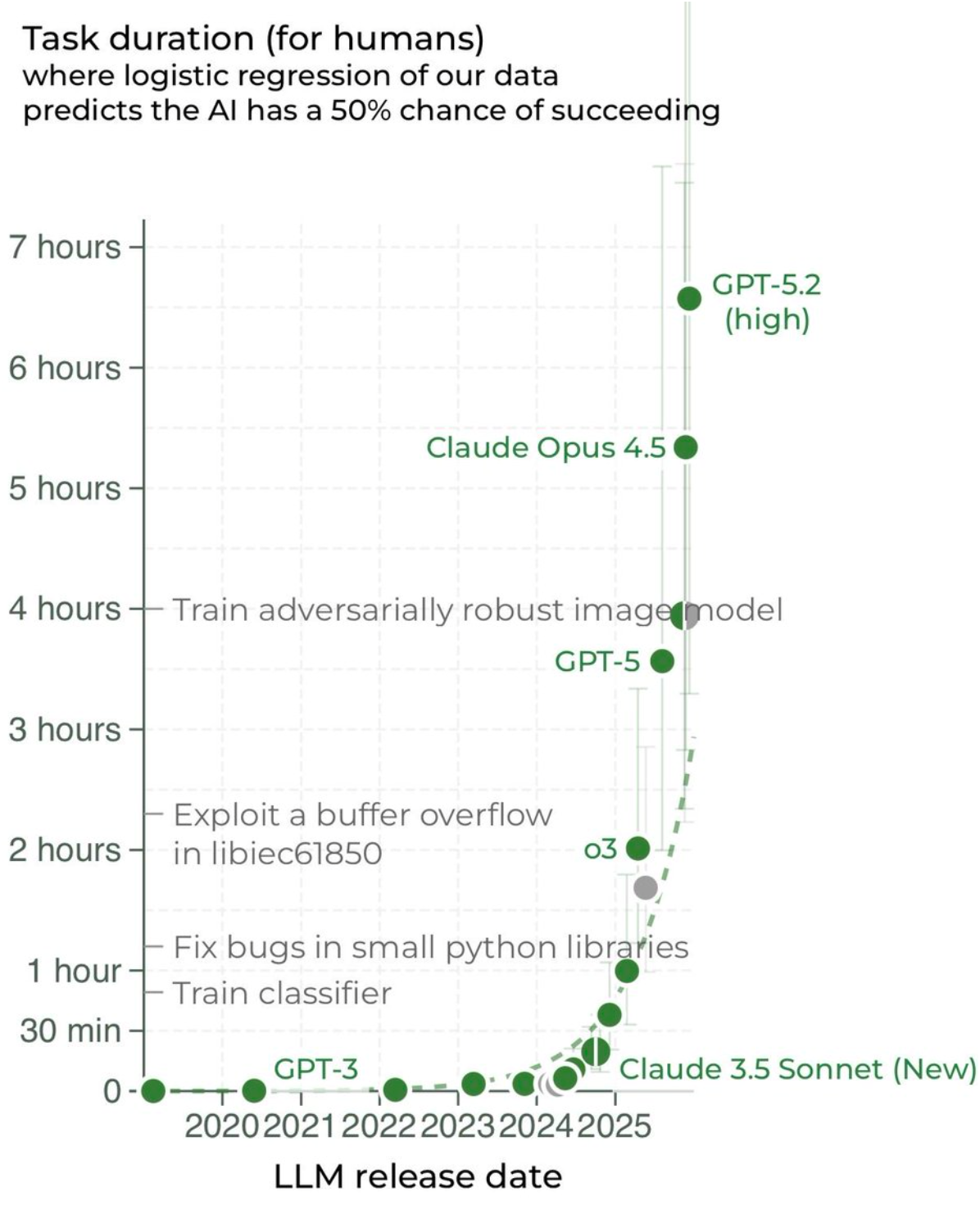
The TL;DR:
The pace of AI improvement has shifted from steady to exponential
New models are moving from “helpful assistant” to “independent operator”
Models have indication of taste and creativity now
Models are being used to improve the next models.
Shumer argues that what engineers experienced over the last year, watching AI go from co-pilot to full replacement on meaningful tasks, is about to ripple into law, finance, medicine, consulting, and beyond. Not someday. Soon.
Whether you agree with the timeline or not, it’s one of the clearest articulations of the current moment I’ve read, and worth your time if you’re building, investing, or operating in SaaS right now.

The One Number That Tells You If You Should Raise Prices
Pricing debates can get emotional fast. Your CFO wants a 20% increase, sales wants a 20% cut, and customer success is bracing for churn.
In this piece, John Cousins lays out a simple framework that cuts through the noise: Price Elasticity of Demand (PED), the one number that tells you whether raising prices, lowering them, or holding steady actually makes sense.
The core idea:
Measure how much volume changes for every 1% change in price
Determine whether your demand is elastic or inelastic
Optimize for profit, not just revenue
The most valuable takeaway is the reminder that pricing power reveals competitive position. If customers barely flinch at price increases, you likely have differentiation. If small increases crater demand, you have a positioning problem, not just a pricing problem.

This is one of the clearest, most practical breakdowns of elasticity I’ve seen for founders.
Final thought
These two pieces connect in an important way.
Put together, the message is:
Know your numbers.
Know your competitive position.
Assume the pace of change is accelerating.
If AI is compressing timelines and lowering barriers, the companies that survive (and win) will be the ones with real pricing power, strong differentiation, and the ability to adapt quickly.
This is not the time to drift. It’s the time to get sharper on strategy, on economics, and on execution. Stay tuned, we’ll bring you all the news!