

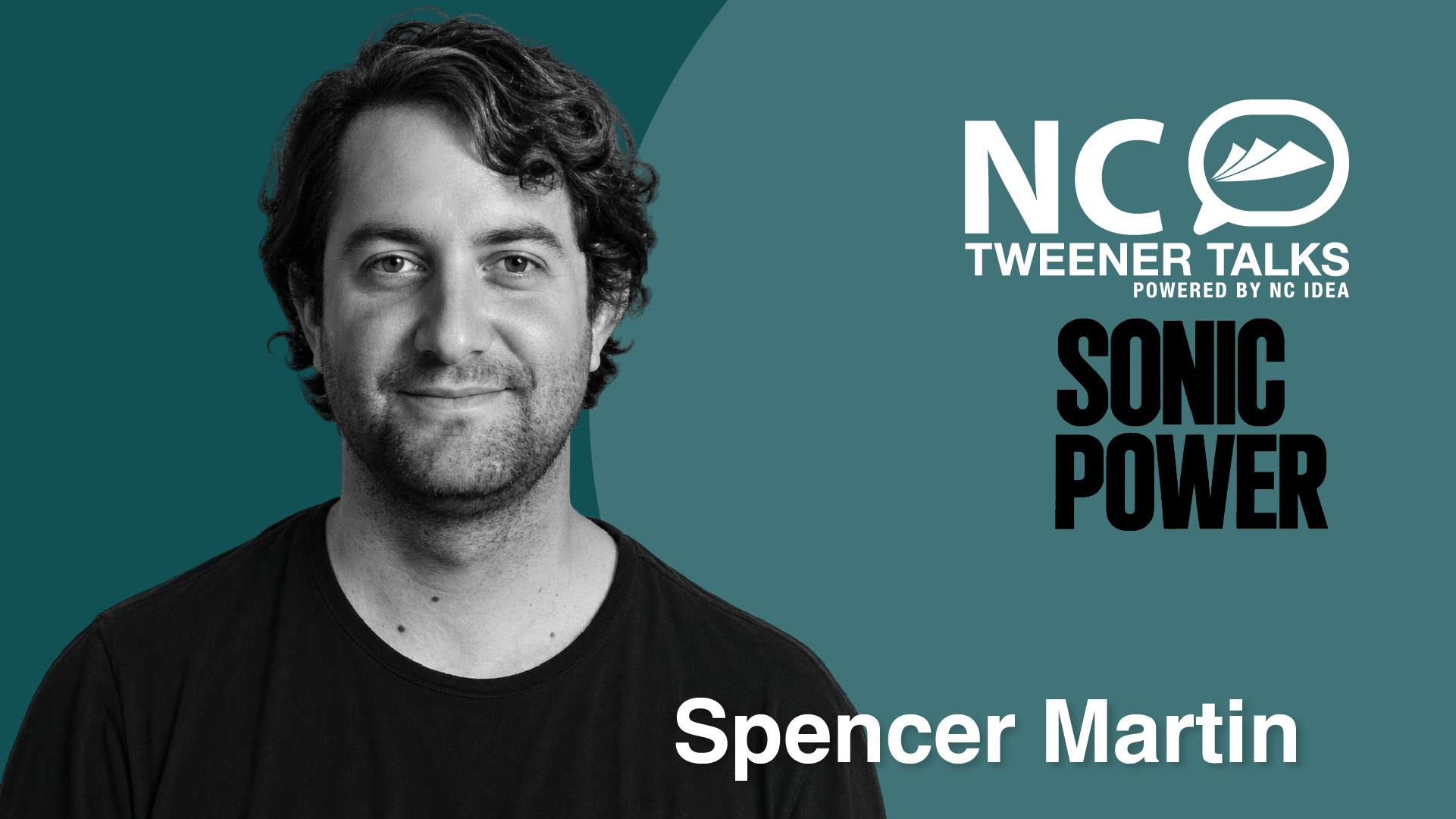
I've thought for decades that what the Triangle really needs is a successful consumer brand. This week's guest is building one. Spencer Martin started Sonic Power here in North Carolina, and he joined me with some big news: a nationwide Target launch for a brand new product line that involves… drains. If you're a CPG founder, this is your episode. But there's plenty of fundraising advice in here for every founder.
We couldn’t bring you 100% original founder-to-founder content like this without the support of our awesome-sauce sponsors:
Loving our content? It wouldn’t be possible without our amazing sponsors and our paid subscribers, so THANK YOU!
Featured Platinum Sponsor

Featured Gold Sponsor

Featured Silver Sponsor

And special thanks to our friends at Walk West for partnering with us to produce this pod!
Who is Spencer?
Spencer Martin is the CEO and founder of Sonic Power, and he calls himself the King of Clean. He started his career in 2012 as a manufacturing broker, sitting between factories in China and their customers. He picked up the trade from his dad and worked with early hardware startups like Nest and Fitbit while based in San Francisco. Next, he spent three years at Magic Leap during the AR/VR boom, ending up as product manager of accessories. When Magic Leap struggled during the pandemic, he became general manager of a public accessories company based in China. That's where he saw a wave of innovation coming out of Asia and got the idea for Sonic Power.
Highlights
The double pivot: Sonic Power started as an all-in-one electronics brand (”a Best Buy where everything is Best Buy-branded”). It reached about $1M in revenue across DTC and Amazon, but wasn’t going to scale. Cleaning products drove most of the revenue and buzz, so Spencer pivoted first to power cleaning, then to a house of consumable cleaning brands.
The $20 ceiling: “If it gets close to 20 retail, I get scared.” Above $20, a product becomes a considered purchase, and Spencer believes building that kind of consumer trust quickly takes $100M or more.
$60 vs. $2: The power-cleaning products were good, but a $60 electric scrubber was a tough sell next to a $2 Scrub Daddy. Target and Ace Hardware took the line seriously, but it didn’t move at retail.
The four-box framework: Every new Sonic Power brand must be (1) consumable and under $20, (2) clearly differentiated, (3) better than incumbents, and (4) a compelling consumer-surplus pitch. Example: $12.99 for Drain Suds versus a $200 plumber visit.
Three new brands: Drain Suds (drain care, launched nationwide at Target), Glide (floor care, challenging Swiffer and Bona), and WaveCloth (cloths and sponges).
Foam and flow: Drain Suds combines foam that reaches the drain overflow, where mold builds up, with a liquid containing natural enzymes and bacteria that break down clogs overnight. It’s positioned as a quarterly drain-maintenance subscription, not an emergency fix.
It’s about the buyer: Spencer says a retail buyer who believes in you is “worth millions of dollars.” He visits Target in Minneapolis about once a year to build the relationship, not just pitch products. Retailers like working with one company behind multiple brands, and Target sees Sonic Power as an innovation engine.
A partner in every channel: Target for general merchandise, Harris Teeter for grocery (about 250 stores, with a potential path to Kroger’s 2,000-plus), Ace for hardware, and conversations underway with Home Depot.
Guerrilla out-of-home: Ten ad trucks in Miami for six months, one circling SoHo over the holidays, a Brooklyn campaign in April, and 100 sidewalk stencils beside New York drains reading “99 problems, this drain ain’t one.”
TikTok Shop as a marketing channel: Spencer sees TikTok Shop as the start of the marketing flywheel, not a profit engine. Foam pouring out of a drain makes compelling 15-second content, and challenger brands can take creative risks that P&G can’t.
The $5M priced round: Spencer is closing a $5M priced round, an up round from the previous one, to fund the launch of three new brands. He moved from the Triangle to Boca Raton partly to be closer to capital.
Family offices are where CPG money is: Family offices often back businesses selling physical products, especially when the family’s wealth came from a similar industry. There’s no Crunchbase for family offices, so fundraising requires networking. When I raised for Spiffy, I asked every VC who passed whether any of their LPs were family offices that might be interested. It took about 100 nos.
Whatever your category, starting a company has more in common across industries than you’d think, and I learned a ton from Spencer about the CPG playbook. Now go to Harris Teeter (Spencer’s pick over Target) and load up your cart with Drain Suds. Enjoy the conversation.
Where to Watch/Listen:
Visit Tweener Talks to listen for all audio podcast players
We have a video version on YouTube (make sure to subscribe!)
📌 What’s Next
Subscribe to NC Tweener Talks for more conversations with North Carolina founders, operators, and builders shaping the future of the ecosystem. Paid subscribers help us keep creating more episodes, events, and founder-focused content across the state.