

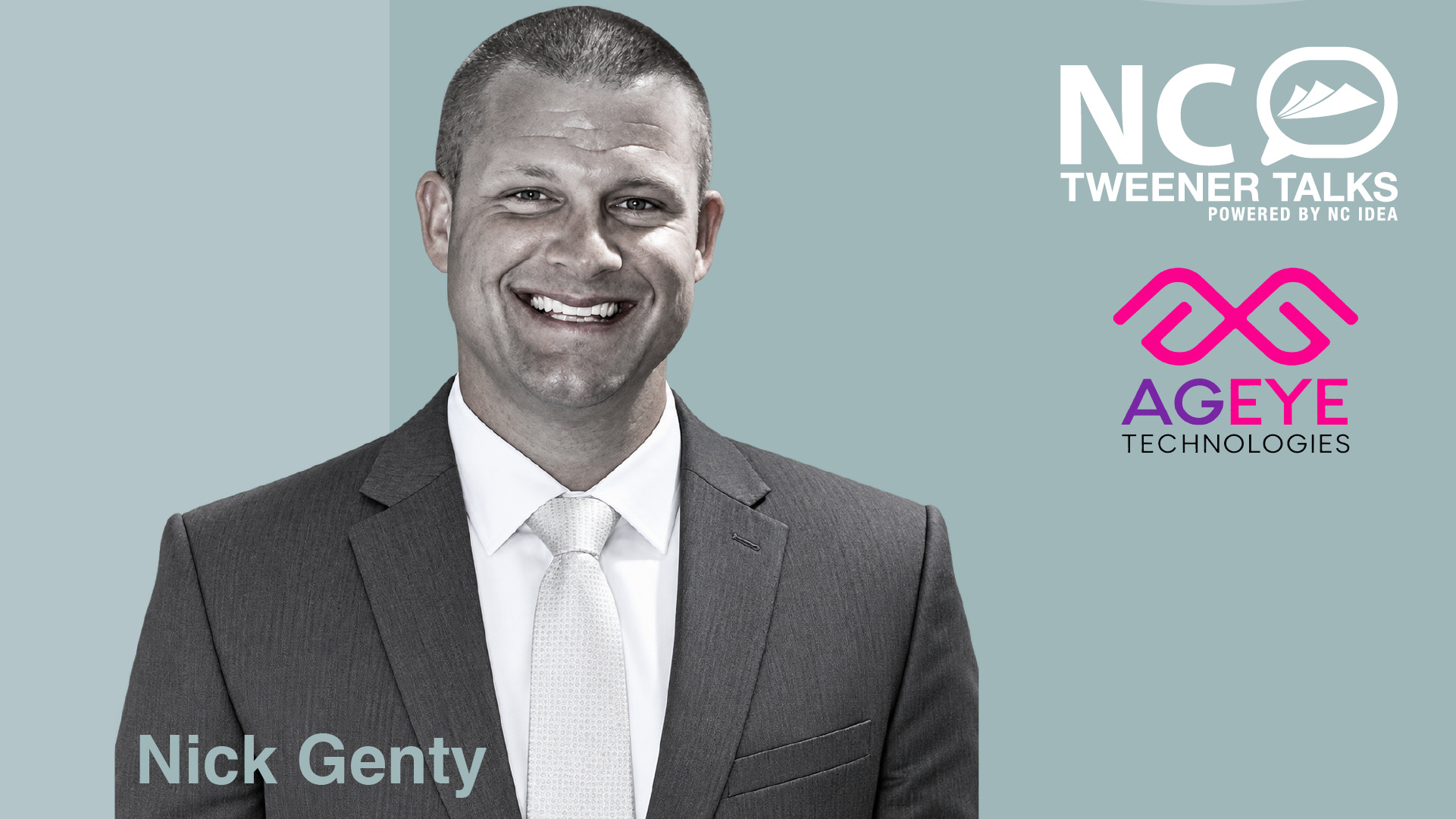
This week on NC Tweener Talks, I sit down with Nick Genty, co-founder and CEO of AgEye Technologies, a Raleigh company building robotics and AI software for indoor farms. It's the latest in my series on North Carolina companies working at the intersection of hardware and software, following Lucid Bots, Plantd, and Natrx. Nick brings a founder's-eye view of what it actually takes to turn an idea about light and plant biology into a business selling to growers from Nebraska to Qatar. Expect a solid mix of company specifics, how the robotics work, what the data moat looks like, and hard-won go-to-market lessons on finding customers nobody else was looking for.
We couldn’t bring you 100% original founder-to-founder content like this without the support of our awesome-sauce sponsors:
Loving our content? It wouldn’t be possible without our amazing sponsors and our paid subscribers, so THANK YOU!
Featured Platinum Sponsor

Featured Gold Sponsor

Featured Silver Sponsor

And special thanks to our friends at Walk West for partnering with us to produce this pod!
Who is Nick?
Nick Genty is the co-founder and CEO of AgEye Technologies, a Raleigh, North Carolina company building robotics and AI software for indoor farms. A Raleigh native, Nick studied general business at East Carolina University before starting his career in IT project management for the North Carolina court system, where he met his longtime collaborator John, a connection that would carry through several ventures over the next two decades. He later joined RPath, an early Triangle startup (later acquired by SAS) that gave him his first real exposure to venture-backed software companies. From there, he co-founded Iconic Solutions, a B2B professional services firm that helped enterprises like Carfax, Harris Teeter, and Live Nation port their businesses to mobile, before steering the company into regulated markets like medical devices and pharma. That work in building IoT and embedded systems for a red-light-therapy hair and skin device is what led Nick and his team to discover the link between hardware, software, and biology that eventually became AgEye.
How We Met
My introduction to AgEye was pure serendipity. On the way to Korean barbecue with a friend, I passed a modest storefront in a Raleigh strip mall and noticed robots and plants through the window. Curious, I walked in, and while Nick wasn't there, a team member explained they were doing indoor farming with AI. Without a business card in hand, I tracked the company down online and reached out cold. I like to call it "invest by walking around," and it's become a running bit on the show: the AgEye team has since moved out of that original space, though Nick notes the old storefront regularly drew confused visitors hoping to get their cell phones repaired.
Highlights
Two ventures with the same co-founder: Nick met his eventual AgEye co-founder while doing IT project management for the North Carolina court system in 2006–2007. The pair have since launched multiple companies together, including Iconic Solutions and AgEye.
From services to product: Iconic Solutions began as a mobile-development shop serving companies like Carfax, Harris Teeter, and Live Nation before moving into regulated industries such as medical devices and pharma, including IoT development for an FDA-track red-light-therapy hair and skin device.
The pivot to agriculture: The red-light-therapy work showed the team how environmental variables like light could influence biology. Faced with a long and expensive FDA pathway, they searched for a non-regulated biological system where they could apply the same thinking and landed on indoor farming.
Ahead of the market, twice: AgEye’s early customers were still running farms on spreadsheets, pushing the company to build a full stack of sensors and software instead of just a data layer. A few years later, edge AI hardware like the NVIDIA Jetson, alongside AgEye joining the NVIDIA Inception program in 2019, made it possible to run AI models directly on low-power devices in the field.
Reddit as a sales channel: Because head growers and farm owner-operators had little presence on LinkedIn, AgEye found some of its earliest customers by actively participating in grower discussions on Reddit.
The cannabis pivot, twice: AgEye initially expected to focus entirely on cannabis and still holds a full North Carolina hemp-growing license. But state-by-state licensing chaos undermined that market, pushing the company toward leafy greens, tomatoes, and strawberries. Nick credits cannabis growers’ early investment in LED lighting and sensors with helping make today’s indoor-ag hardware affordable.
Why indoor farms exist even in “good” growing regions: Roughly 80–85% of U.S. leafy greens come from Salinas Valley or Arizona, regions vulnerable to drought and water restrictions. At the same time, food deserts for produce like basil can persist even in agricultural states such as North Carolina.
The moat is built linearly: Nick sees AgEye’s combination of hardware and proprietary plant data as a moat competitors can’t simply reverse-engineer: “someone couldn’t just look at what you’ve done and really ascertain how you got there and decode it.”
$5M raised, mostly through corporate VCs: After struggling to excite RTP’s SaaS- and pharma-heavy investor base, AgEye found its fundraising breakthrough through corporate venture arms, including Dutch agricultural giant Nurion and German filtration company Mann+Hummel, whose businesses had direct strategic ties to indoor farming. Nick estimates 95% of AgEye’s investors and customers came through warm introductions.
What’s next: AgEye has signed two large-scale distributor contracts and a new Middle East partnership in Qatar, opening a hospitality and food-and-beverage segment centered on compact, self-contained farms for restaurants and resorts.
As I like to put it, this is the kind of company sitting right in your own backyard, so keep your eyes open on your next lunch walk. Enjoy the conversation.
Where to Watch/Listen:
Visit Tweener Talks to listen for all audio podcast players
We have a video version on YouTube (make sure to subscribe!)
📌 What’s Next
Subscribe to NC Tweener Talks for more conversations with North Carolina founders, operators, and builders shaping the future of the ecosystem. Paid subscribers help us keep creating more episodes, events, and founder-focused content across the state.