


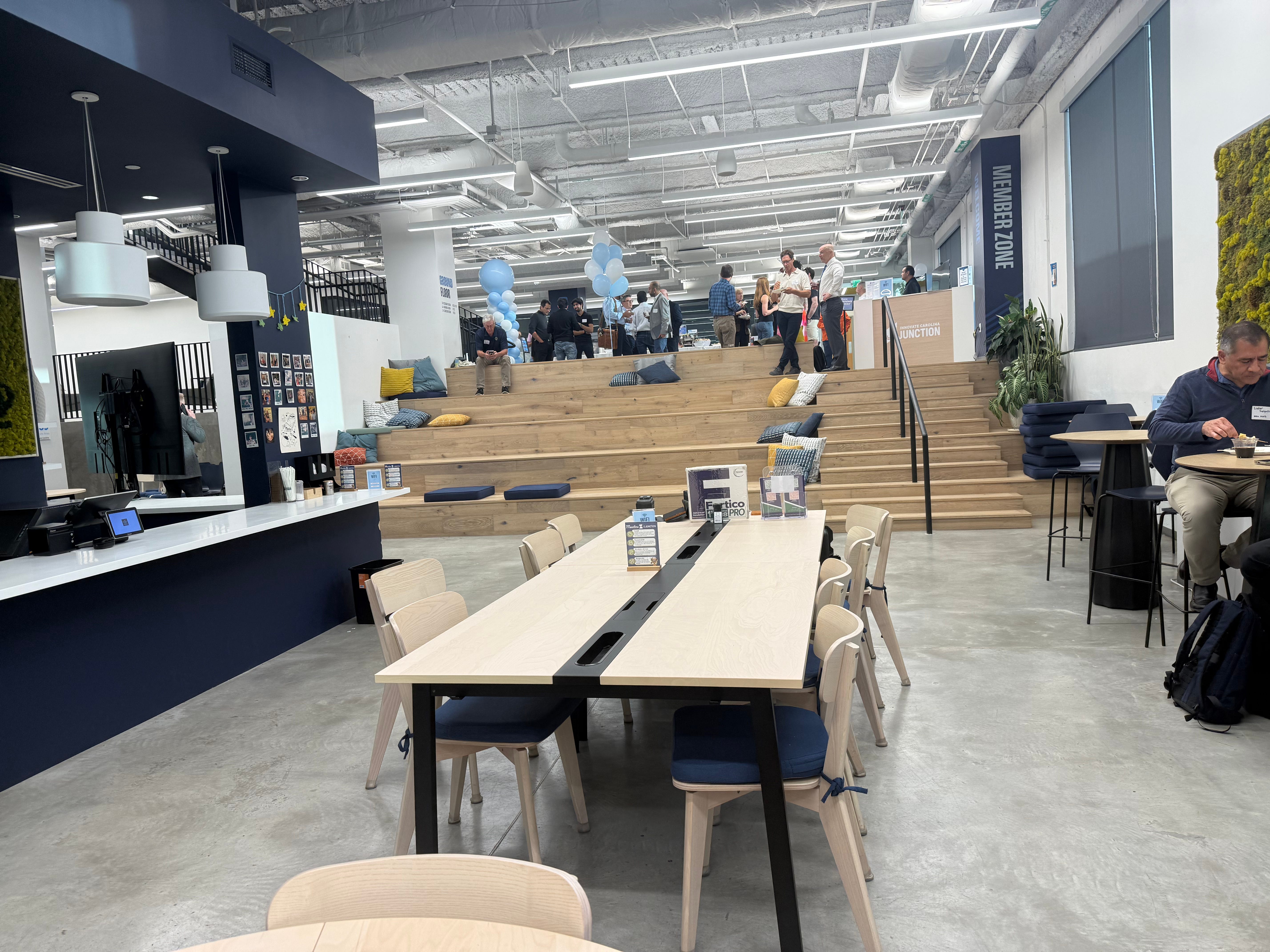
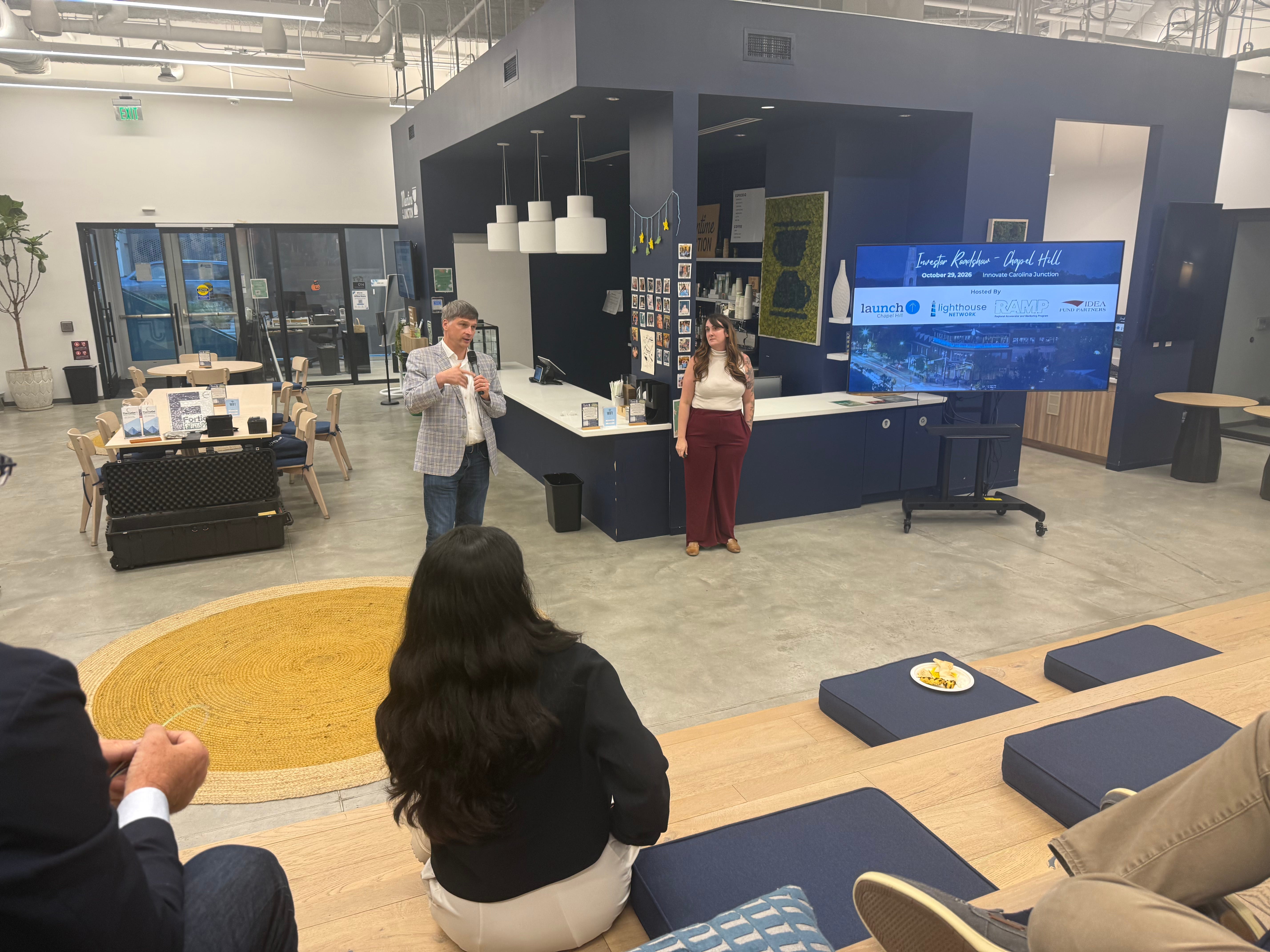
On Thursday night, I joined a packed room at the Innovate Carolina Junction for the Chapel Hill stop of the Investor Roadshow, a joint effort between Lighthouse (Richmond), RAMP (Roanoke), IDEA Fund Partners, and Launch Chapel Hill. The format is simple and unforgiving: eight companies, five minutes per pitch, then networking, drinks, and follow-up conversations. The night before, the same crew ran a stop in Wilmington.
Thanks to our sponsors for sponsoring this post:


Why a Virginia group keeps driving to North Carolina
The origin story is worth repeating, because it says something about our ecosystem. The Lighthouse team told the room that roughly 80% of the venture capital going into Virginia startups comes from out of state. About four years ago, they went looking for where that money comes from, and much of the trail led here. Their pitch for North Carolina was twofold: we move money better, and we collaborate better.
What started as two Virginia organizations leaning on personal NC connections has grown into a multi-partner tour. Emil Runge of Launch Chapel Hill described the hub’s role in an emerging innovation district, where founders in their sixties work alongside students winning national competitions. He also previewed something new: a commercialization accelerator spanning Duke, NC State and UNC, with an intro later this year and the program running early next year.
The pitches
WorldSafe: safety as a subscription
Joe Heinzen opened with the most personal pitch of the night. While at LiveSafe, a crisis-communications platform, he watched the technology degrade after an acquisition. During a building fire in Denver, an emergency alert never went out. He resigned the next day and started WorldSafe the following week.
WorldSafe does two things. It vets safety products, from drones to access control to staff training, and gives those reviews to the market free. Its paid product is Resiliency as a Service (RaaS): recurring assessments, mitigation plans that weigh the cost of a vulnerability against the cost to fix it, business continuity planning, training, a fractional security officer and on-call crisis support. Pricing scales with employees and locations.
Traction: about $442K in recurring revenue, ~$11K average deal, ~$1.1M total revenue, 156% year-over-year growth
Customers: the Miami Dolphins, Berkshire Hathaway, the United Nations, the PGA and Performance Food Group, plus many nonprofits it helps apply for security grants
Website: worldsafe.co · CEO: Joe Heinzen on LinkedIn
Helix Acoustics: fixing DNA’s slowest step
Cofounder and CEO Alexia Stettinius, who earned her PhD at Virginia Tech, argued that sequencing has gotten dramatically faster and cheaper while sample prep has not. Helix’s answer is focused ultrasound extraction (FUSE). Sound waves converge on a point, form a cloud of microbubbles, and break tissue and cells apart to release DNA.
Results vs. standard workflows: up to 550x higher extraction efficiency, up to 140x faster processing and up to 4x more DNA yield, across plant, animal and bacterial samples
Go-to-market: research and agriculture labs first, then clinical labs, then pharma
Products: a sample evaluation service now, the single-sample SonoSolve One by early 2028, and a higher-throughput SonoSolve Multi by 2030, with recurring consumables
The ask: $800K, on top of more than $1.8M already raised in research and non-dilutive funding
Profile: Helix Acoustics at RAMP · CEO: Alexia Stettinius on LinkedIn
Trinitite: making AI agents follow your rules
Cofounder and CTO Hearsch Jariwala pitched Emu, a guardrail layer for personal AI agents, the kind that book flights or order groceries on your behalf. Emu runs locally on your device and learns your rules, values and preferences. It then decides when an agent can act on its own and when a human should approve. The founders cited data showing users rubber-stamp the vast majority of agent permission prompts, including risky ones, out of fatigue.
Model: free for individuals; teams pay per seat to set rules across the organization. A local, prepaid-style payment option lets agents transact without handing over card details.
Traction: a booth at TechCrunch Disrupt in San Francisco produced 300+ sign-ups in 48 hours, and the team says it completed paid work with a Big Four firm
Website: trinitite.ai · CTO: Hearsch Jariwala on LinkedIn
ThermaGel Innovations: aerogel at a price the mainstream can pay
CEO Tom Warren brought a sample and invited people to hold it. ThermaGel makes a new aerogel material and builds products from it: Fortico panels and ChillArmor for building insulation and cold chain, and EmberX plus a second product for lithium battery safety, one working inside the battery to stop thermal runaway and one around it to keep a fire from spreading cell to cell.
Performance: R-18 per inch, versus the R-6 most insulation delivers; about 3x foam boards and 7x fiberglass. A wrapped machine jacket held 150°C inside to roughly 40°C on the surface.
Edge: lower cost than other aerogels, a new conformable version for ducts and pipes, 10+ patents, and scrap that can be recycled into any product
The ask: $5M for capex, staffing, sales and UL and ICC certifications, covering three years of working capital. The company projects cash-flow positive in two to three years.
Website: getthermagel.com · CEO: Tom Warren on LinkedIn
Pod Farms: hydroponics that fits in a farmer’s hand
Cofounder and CEO Toni Sperry made the case for small growers. A specialty-crop field farmer needs 50 to 100 acres to support a family. Commercial hydroponic systems help, but their long channels are hard to access and can’t germinate seeds, so crops get started in trays and moved by hand.
Her team packed those benefits into a modular unit you can hold in one hand. It is easy to clean, works with automation, and lets growers germinate in place, removing a transplanting step that can cost a small farm tens of thousands of dollars a year in labor.
Claim: more than 7x the production in the same space, enough to make a living on under an acre, or in a 4,000 sq ft greenhouse using sunlight
Business: equipment kits and full-facility outfits at 70%+ margins, with farm management services and training curricula coming
Traction: one pilot completed in North Carolina, one running in Virginia, a third deploying this year, and coverage in two major industry outlets
Website: podfarms.com · CEO: Toni Sperry on LinkedIn
Sensible: a wearable for menstrual blood
Founder and CEO Nandini Kanthi, a UNC student and Launch Chapel Hill alum, gave the pitch the room seemed to remember most. Sensible is a smart sticker that attaches to pads or period underwear and collects blood overnight. By morning, results show up in an app.
The initial focus is inflammatory signals and blood-loss metrics tied to conditions like endometriosis and PCOS, which often take seven to ten years to diagnose. Longer term, Kanthi sees a platform: menstrual blood carries 385 proteins found nowhere else in the body. Her analogy was continuous glucose monitoring, which turned isolated finger-pricks into an industry.
Validation: a survey of ~300 women in which more than half had missed work or school because of their periods
Traction: LOIs, two patents filed, a study with the UNC School of Medicine, pilot talks with Siemens, and a spot among the top 30 undergraduate startups in the U.S.
The ask: a pre-seed round to reach pilot within 16 months
Website: sensiblepad.com · CEO: Nandini Kanthi on LinkedIn
SPOT: one model for the whole build
John Brock, a custom home builder for 30 years, built the software he always wanted. SPOT stands for Single Point of Truth. Builders host interactive 3D models alongside drawings and renderings, pull accurate quantities from them, and tie it all to estimates, so changes don’t get lost between the office and the superintendent.
The timing argument: CoConstruct, which many custom builders rely on, is sunsetting in April 2027 according to Brock. SPOT has 10 customers, founding-builder pricing locked for two years, and plans for a push after the International Builders’ Show in Las Vegas.
Website: spotcm.com · Founder: John Brock on LinkedIn
Liquet Medical: personalized treatment for blood clots in the lungs
CEO John Schindler of Glen Allen, Virginia-based Liquet Medical closed out the night. The company develops a drug delivery catheter for pulmonary embolism, blood clots in the lungs. Its Versus Catheter lets physicians tailor clot-busting treatment using real-time pulmonary artery pressure, an approach the company calls hemodynamics-led thrombolysis.
Regulatory: two FDA 510(k) clearances for the Versus Catheter, in December 2024 and February 2026
Stage: an oversubscribed seed round, raised to fund a pilot study, with the pitch centered on capturing early clinical experience
The path: the team laid out a route to roughly $50M in revenue within five years and showed a slate of likely strategic acquirers, noting that cardiovascular device companies commonly sell at around 10x trailing revenue
Website: liquetmedical.com · CEO: John Schindler on LinkedIn
What stood out
Safety was the unofficial theme. Physical safety (WorldSafe), AI agent safety, and battery fire safety (ThermaGel) all showed up in one evening. Different markets, same buyer anxiety: things are failing in ways people can’t see until it’s too late.
University research is making the jump. Helix Acoustics comes out of Virginia Tech’s ultrasound lab and Sensible out of UNC. With a tri-university commercialization accelerator on the way, expect more lab-born companies on stages like this one.
The asks were modest and specific. $800K for Helix, $5M for ThermaGel, a pre-seed for Sensible. Most founders tied the money to a concrete milestone: a product launch, a certification, a pilot. That’s the kind of clarity early-stage investors can underwrite.
The Virginia–North Carolina corridor is real. WorldSafe, Helix Acoustics, ThermaGel, Liquet Medical and Roanoke-based SPOT all came down from Virginia to pitch a largely North Carolina room. If 80% of Virginia’s venture dollars come from outside the state, events like this are how relationships get built before term sheets.
Go talk to them
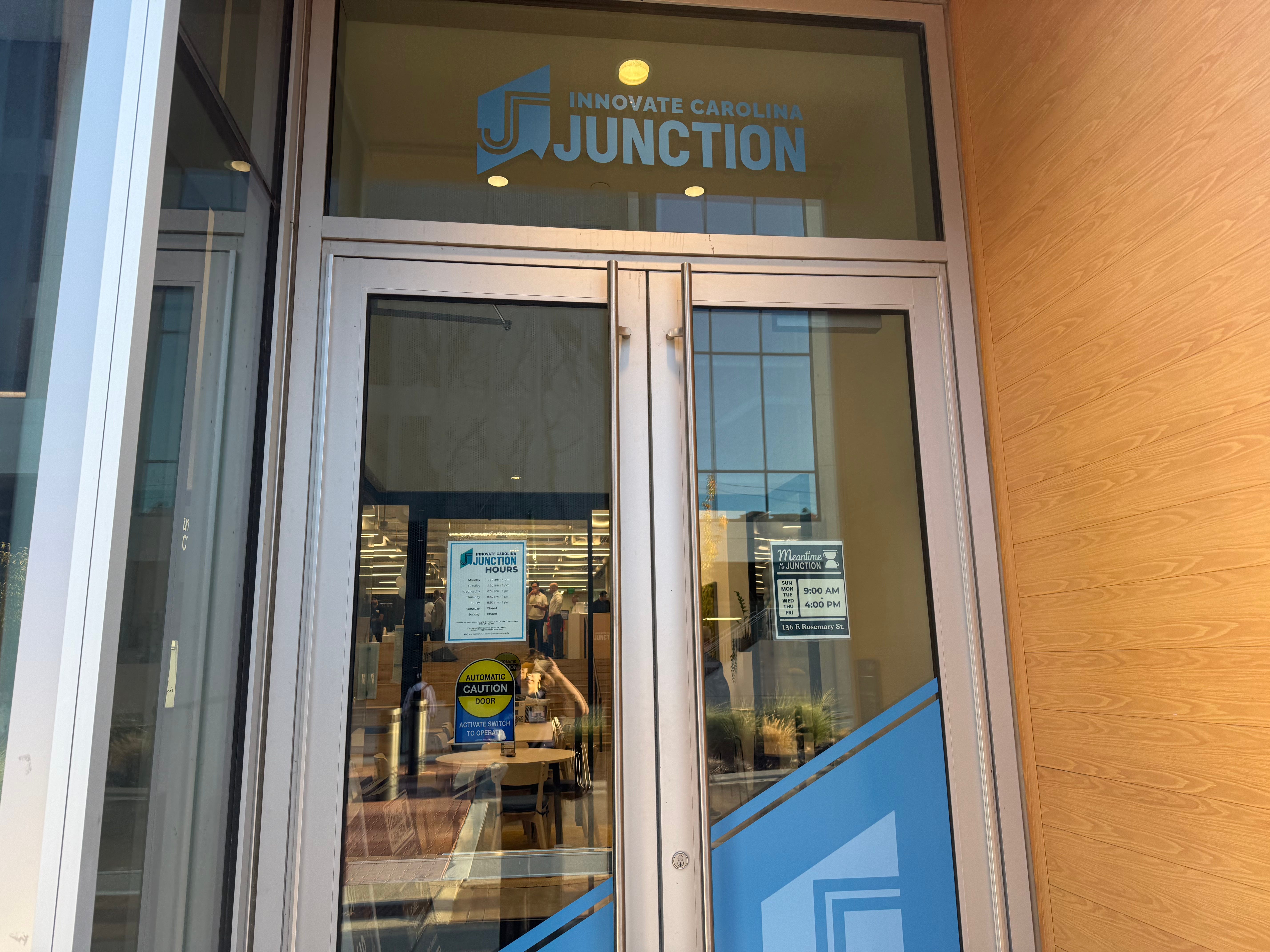
The best part of the night came after the pitches, when founders and investors spilled into the hallway to keep talking. If any of these companies caught your eye, reach out. The organizers have contact details for every founder and are happy to make introductions.
Thanks to Lighthouse, RAMP, IDEA Fund Partners and Launch Chapel Hill for putting this together, and for the reminder that capital and collaboration don’t have to stop at the state line.