

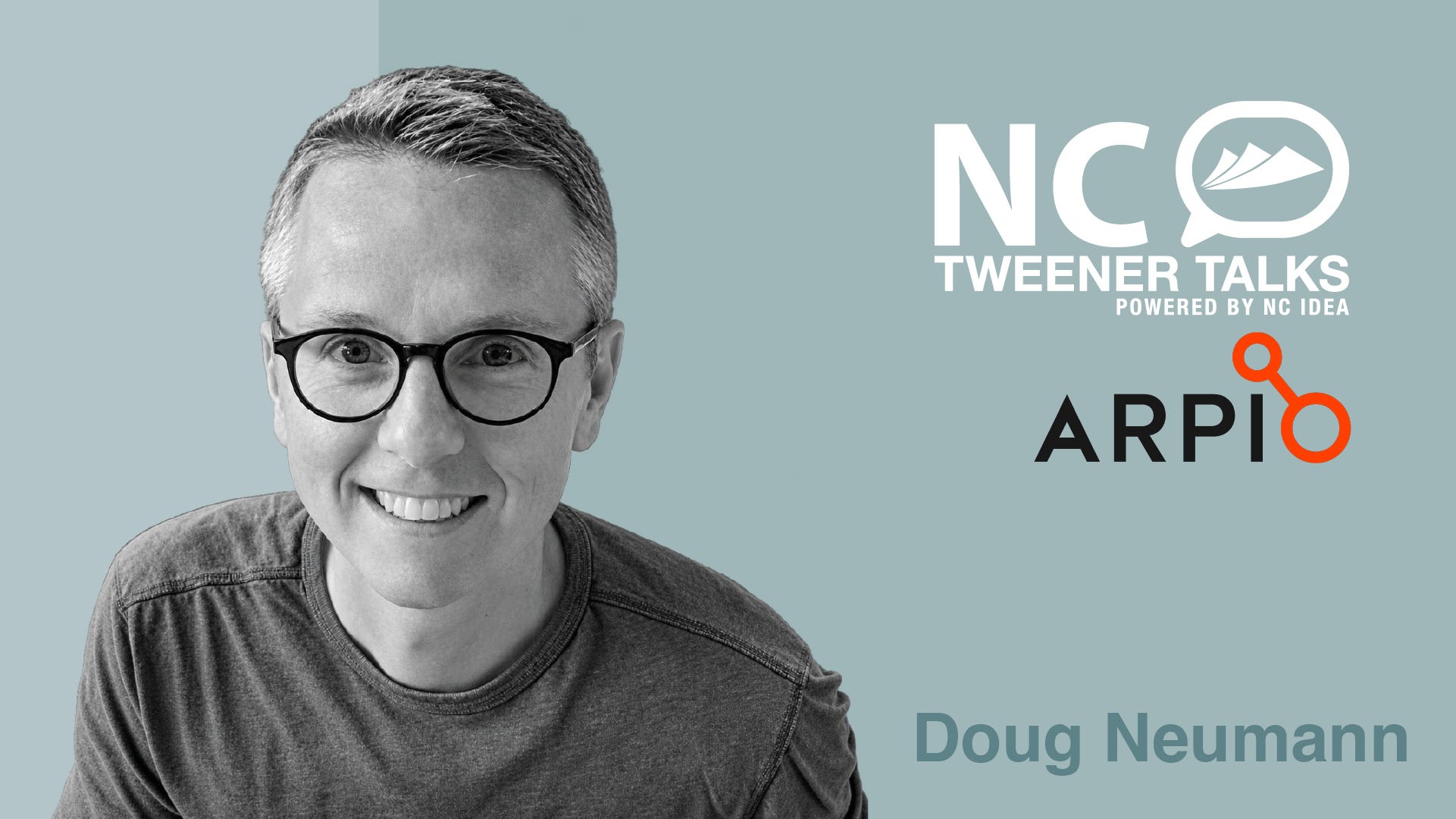
Some startup stories go up and to the right. This one is more of a rocket coaster. Doug Neumann’s Arpio has been through a stalled COVID launch, a virtual YC batch, a signed LOI that fell apart at the finish line, and a Series A that came together almost twice as big as planned. It’s about half company story and half hard-won founder lessons.
We couldn’t bring you 100% original founder-to-founder content like this without the support of our awesome-sauce sponsors:
Loving our content? It wouldn’t be possible without our amazing sponsors and our paid subscribers, so THANK YOU!
Featured Platinum Sponsor

Featured Gold Sponsor

Featured Silver Sponsor

NC Tweener Times is a reader-supported publication. To receive new posts and support my work, consider becoming a free or paid subscriber.And special thanks to our friends at Walk West for partnering with us to produce this pod!
Who is Doug?
Doug Neumann is co-founder and CEO of Arpio, a Research Triangle company that does disaster recovery and resilience for cloud workloads on AWS and Microsoft Azure. Doug grew up in Texas and Oklahoma. He went to Davidson College and then Washington University in St. Louis through a 3-2 engineering program, and that’s where he fell in love with computer science. He worked at an LA startup during the dot-com boom, then spent nine years at Microsoft’s dev center in Cary helping design the Visual Studio suite. From 2012 to 2018, he ran the software team at Bandwidth, which grew from about 200 to 500 people and went public during that time. He started Arpio in 2018 with his co-founder Shaw, an engineer he’d worked with at both Microsoft and Bandwidth. Arpio now has 60 people and customers like Choice Hotels and Scotts Miracle-Gro.
How We Met
Doug is a proud member of what I have started calling the "Bandwidth mafia" (a good mafia), the growing group of North Carolina startups founded by Bandwidth alumni. "It doesn't have an Elon Musk yet," one of them jokes, "but it's still early." We are tied together in the Triangle in a few other ways too. Arpio's board member Eric from S3 Ventures also sits on the RepVue board with me, and our board meetings happened back-to-back the week we recorded. Doug's mentor Hersh Tapadia of Allstacks, a past Tweener Talks guest, introduced him to about half of Arpio's investors. And I quietly run interference for him: when private equity firms ask me about Arpio, I tell them Doug is staying on the venture path.
Highlights
The rocket coaster: I open with a past guest’s description of startup life as a rollercoaster on a rocket.
A typo that started a company: While Doug was at Bandwidth, an Amazon engineer’s typo during routine maintenance took down AWS’s largest region, US-East-1, for about five hours. Doug had pushed his team onto AWS while Bandwidth’s old-school data centers were “cooking just fine.” As he put it, “There was a lot of egg on my face.” The outage exposed a bigger problem: the cloud hadn’t solved disaster recovery.
Pivot in two weeks: Arpio’s first idea was making on-call less painful. At NC IDEA’s Idea Labs, where the advice was “Go find pain and then solve pain,” the founders spent two weeks seeking validation, found none, and used the remaining four weeks to develop Arpio.
The name is a pun: Arpio comes from RPO, or recovery point objective. Its Hacker News launch coincided with the GameStop meme-stock frenzy, and the few people who noticed kept asking whether the company was named after Sheriff Joe Arpaio.
One slide, 50 intros: Arpio launched in March 2020 and finished the year with the same two customers. Then came a fully virtual Y Combinator batch. At demo day, Doug had 60 seconds and one slide to pitch roughly 5,000 VCs. The next day, he had 50 investor introductions.
Builder cloud vs. operator cloud: On AWS, Arpio’s biggest competitor is teams that prefer building disaster recovery themselves. Doug believed Microsoft Azure was more of an operator’s cloud, and early organic growth on Azure is supporting that thesis.
“We’re insurance”: Disaster recovery customers need to trust that their provider will be there when disaster strikes. Building that trust requires a strong brand, and brand building is expensive.
AI and go-to-market: With an average annual deal size exceeding $200K, AI-driven BDR outreach didn’t work for Arpio. What works now is “really warm calling,” following up with leads from events like AWS re:Invent. Doug also built an AI agent to filter cold outreach from his own inbox.
Walking away from the deal: Arpio signed an LOI with a strategic acquirer, but after three months of diligence, a major deal slipped by a few weeks, and the buyer tried to lower the acquisition price. Doug refused, secured insider support from S3 Ventures, and raised a $15M Series A, nearly twice the original $8M target, with Paladin Capital Group joining.
By the numbers: Arpio raised $2.1M in pre-seed funding in 2021, including YC, and a 2023 round led by S3 Ventures after surpassing $1M ARR. Once the first term sheet arrived, four more followed within a week. Today, Arpio has 60 employees, covers more than 200 AWS services, and is targeting at least $50M in annual revenue before considering an exit.
Founder lessons: “Plan to do at least two startups, because you learn so much in the first one.” Pay for experienced talent because “your job is to build a business quickly.” And in Doug’s experience, enterprise IT software isn’t bootstrappable.
Doug calls the whole thing a journey of hindsight, and he’s generous about sharing it so the rest of us can skip a few of those lessons. Enjoy the conversation.
Where to Watch/Listen:
Visit Tweener Talks to listen for all audio podcast players
We have a video version on YouTube (make sure to subscribe!)
📌 What’s Next
Subscribe to NC Tweener Talks for more conversations with North Carolina founders, operators, and builders shaping the future of the ecosystem. Paid subscribers help us keep creating more episodes, events, and founder-focused content across the state.