

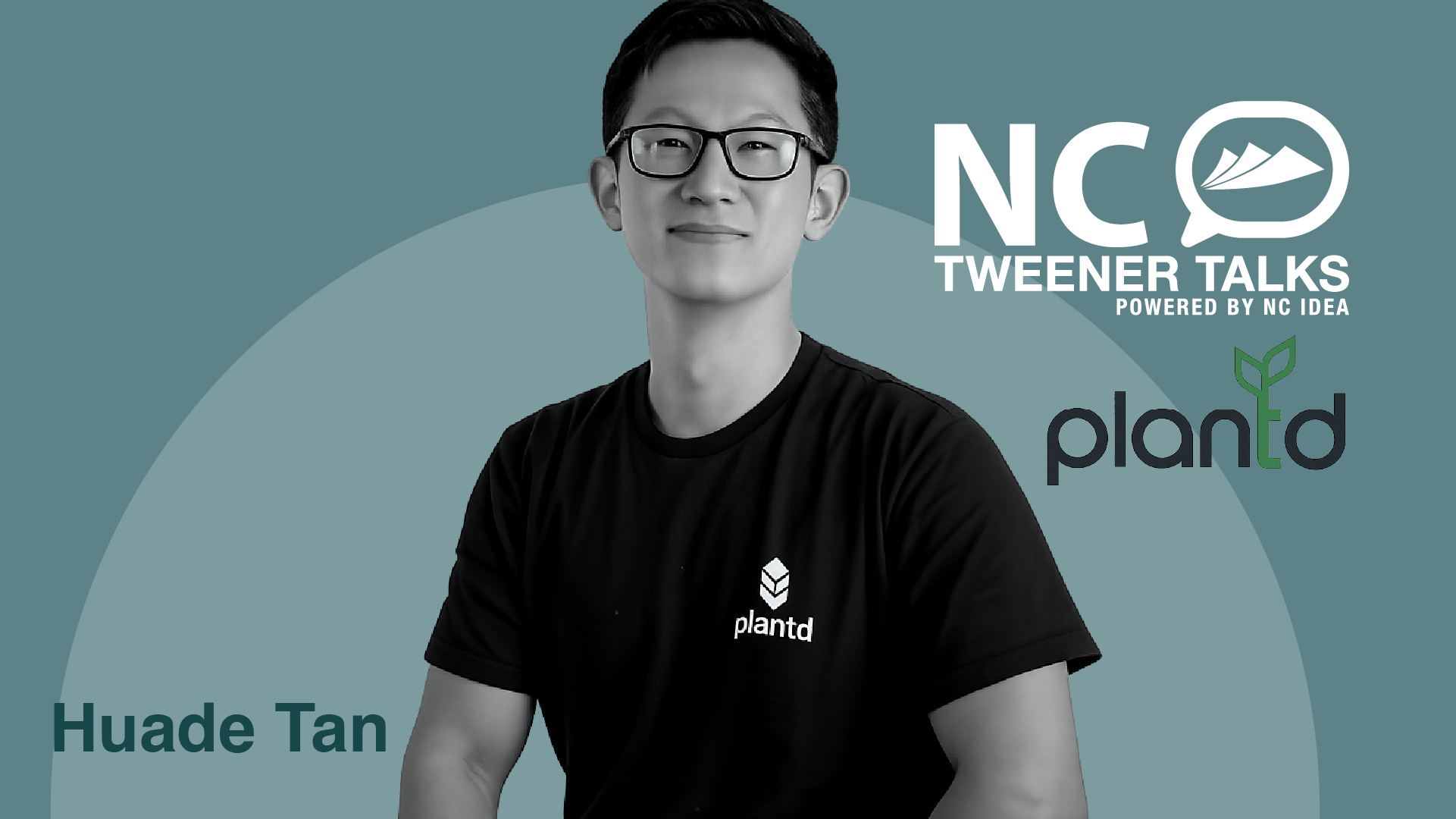
This week's episode is part of an ongoing series spotlighting North Carolina companies that aren't your typical software startups. I sit down with Huade Tan of Plantd, a materials company that takes carbon out of the atmosphere and turns it into structural building panels that are grown, harvested, and pressed entirely in North Carolina. The conversation leans heavily technical and founder-lesson-heavy rather than company-pitch-heavy: expect plant science, hardware iteration, and a lot of SpaceX-honed engineering philosophy.
We couldn’t bring you 100% original founder-to-founder content like this without the support of our awesome-sauce sponsors:
Loving our content? It wouldn’t be possible without our amazing sponsors and our paid subscribers, so THANK YOU!
Featured Platinum Sponsor

Featured Gold Sponsor

Featured Silver Sponsor

And special thanks to our friends at Walk West for partnering with us to produce this pod!
Who is Huade?
Huade Tan is the co-founder and CTO of Plantd, a North Carolina materials company that captures carbon by growing a perennial grass and converting it into structural building panels. Before Plantd, Huade spent years at SpaceX building environmental control and life support systems for the Crew Dragon spacecraft, working on cargo and crew systems for missions to the International Space Station. He studied mechanical engineering as an undergraduate at Boston University, did a stint in computational optimization at Notre Dame, and began a PhD program at Columbia before deciding to leave academia for SpaceX. He co-founded Plantd with Nathan, his SpaceX colleague, after the two relocated to North Carolina in 2019 and formally launched the company in 2021.
Highlights
Two former SpaceX engineers left Los Angeles to pursue carbon capture and instead invented a process that turns a perennial plant into a plywood-like structural panel manufactured entirely in North Carolina.
Huade compares SpaceX’s 10-cubic-meter Crew Dragon life-support capsule to Earth because both are closed-loop systems with no external supply pipeline except incoming solar radiation.
Plantd rejected carbon credits as its core business model and instead chose to build cost-competitive construction materials that naturally sequester carbon while delivering customer value.
Plantd’s feedstock is a sterile perennial grass that produces no seeds and is propagated entirely through cloning, with root systems that regrow for decades without replanting.
The crop survived an early 2026 drought and continued growing without any irrigation.
The manufacturing process converts harvested grass into structural panels by shredding the fibers, drying them to a precise moisture level, blending them with 4 to 6% PMDI resin, and pressing them under heat and pressure within a matter of hours.
Plantd built a 15-foot-wide, 70-foot-long press capable of producing up to 250,000 structural panels annually. It is the first of its kind built by a U.S. company outside two German manufacturers and the first domestic attempt since the 1960s or 1970s.
Industry experts said building the press was impossible, but Plantd says it has successfully demonstrated otherwise.
Plantd has raised $40 million to $45 million from seed funding through its Series B to build its farms, manufacturing process, supply chain, and production equipment.
In 2024, D.R. Horton agreed to purchase 10 million Plantd panels, enough for approximately 90,000 homes while sequestering an estimated 165,000 metric tons of CO₂.
Plantd applies SpaceX’s five-step engineering framework: make the requirements less dumb, delete the part if possible, improve the part if necessary, increase production takt time, and then automate. The company says it is currently focused on the final two steps.
I feel like I learn about 50 new things every time I talk to Huade and the Plantd team, and this conversation makes it easy to see why. Enjoy the conversation.
Where to Watch/Listen:
Visit Tweener Talks to listen for all audio podcast players
We have a video version on YouTube (make sure to subscribe!)
📌 What’s Next
Subscribe to NC Tweener Talks for more conversations with North Carolina founders, operators, and builders shaping the future of the ecosystem. Paid subscribers help us keep creating more episodes, events, and founder-focused content across the state.