

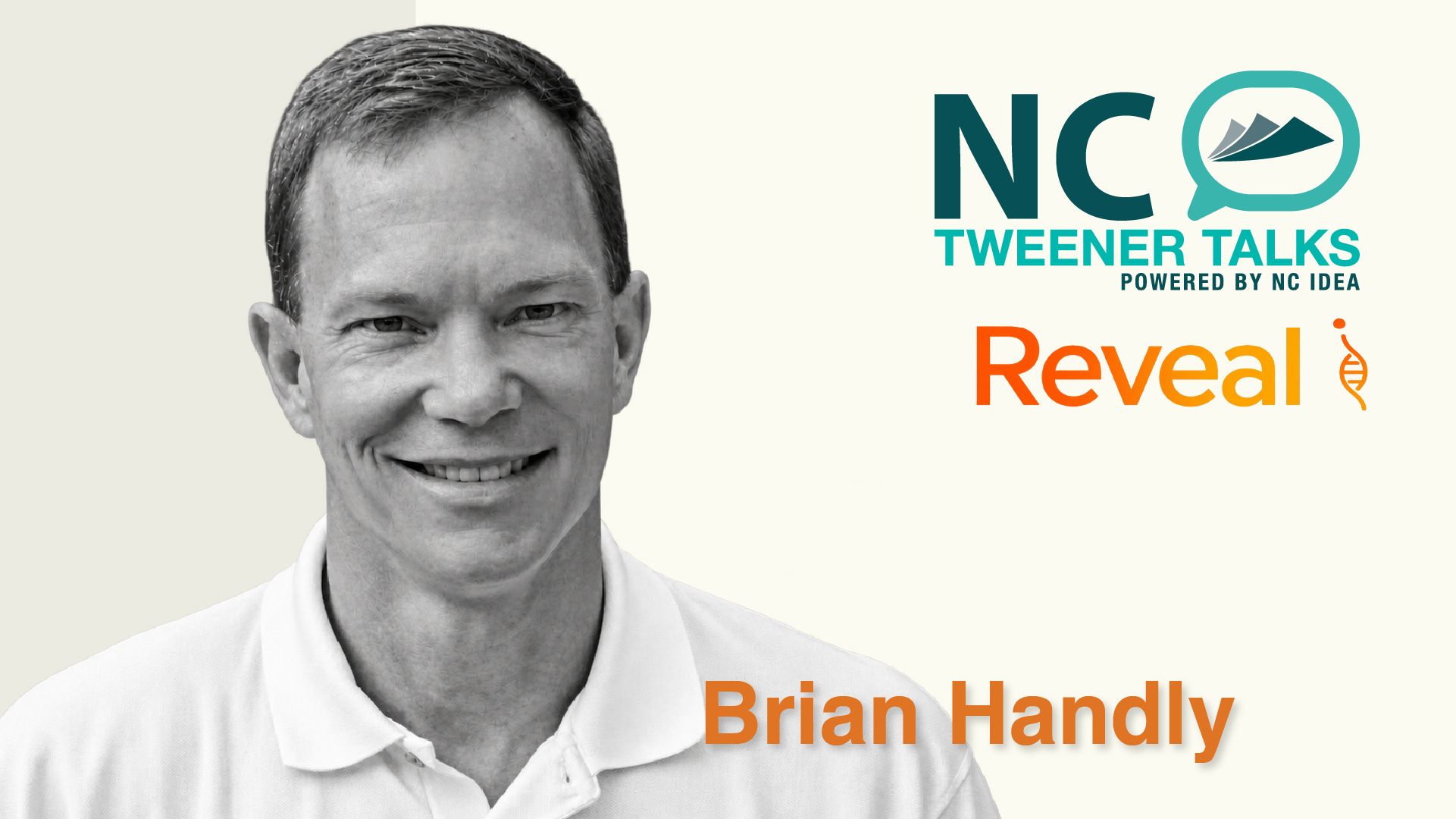
This week’s episode is a story-driven one. Brian Handly has been building in the Triangle since the dot-com days, and his path runs from level one tech support to owning the company, through Microsoft, and into Reveal Mobile. About two-thirds of the conversation is his founder journey, and the back third digs into how out-of-home advertising gets measured and what AI is doing to the ad business.
We couldn’t bring you 100% original founder-to-founder content like this without the support of our awesome-sauce sponsors:
Loving our content? It wouldn’t be possible without our amazing sponsors and our paid subscribers, so THANK YOU!
Featured Platinum Sponsor

Featured Gold Sponsor

Featured Silver Sponsor

And special thanks to our friends at Walk West for partnering with us to produce this pod!
Who is Brian?
Brian Handly is the founder and CEO of Reveal Mobile, a Raleigh company that measures the performance of out-of-home advertising: billboards, transit, gas-pump screens, and more. Brian has a marketing degree from the University of Missouri and went back to NC State for computer science, which led to his first ad tech job at Accipiter in 1997. He rose from level one support to VP of operations in two years, bought the company back out of the dot-com wreckage in 2001, and sold it to aQuantive, which Microsoft then acquired for $6 billion. After three years at Microsoft, he helped launch the CED’s venture mentoring program before spinning StepLeader out of Capital Broadcasting in 2012. StepLeader became Reveal Mobile. Reveal acquired Mira, an out-of-home measurement startup founded by brothers Jon and Gabe, in 2021.
How We Met
Brian and I go back more than 20 years, to the era when we were both building through the dot-com boom and bust. I call Brian my speed dial for anything about online ads, ad tech, billboards, or how advertising really works. Honestly, I couldn’t believe I hadn’t had Brian on the pod yet. I knew the story so well that I just assumed it was already out there. I also gave Brian a shout-out on air: of the roughly 180 investor updates I receive, Brian’s are always top tier.
Highlights
From support desk to VP: Brian joined Accipiter in February 1997 as a level one tech support engineer and became VP of operations within two years, at age 31.
The golfer signal: In October 1999, Brian overheard a golfer bragging about making money on CMGI without knowing what the company did. He sold all his shares that Monday, months before the March 2000 crash.
Paid to buy his own company: When DoubleClick backed out of acquiring Accipiter, Brian convinced employees to waive $2 million in severance obligations in exchange for a $500,000 payment to him. “They paid me to take it off their hands.”
The eight-year overnight success: Brian rebuilt Accipiter and sold it to aQuantive, then benefited again when Microsoft acquired aQuantive for $6 billion at a reported 175% premium. “I was an overnight success. I think it just took me 8 years.”
A tale of two halves: Accipiter’s revenue surged during its first 18 months under Microsoft, but a strategic pivot toward Bing forced Brian to spend the next 18 months unwinding those deals.
“Give me 6 months”: As broadcast consolidation reduced StepLeader’s addressable market from 800 independent stations to roughly three buyers, Brian asked the board for six months to find a new business. His exploration of Bluetooth beacons eventually became Reveal.
Churn as a compass: Reveal’s local-business product reached roughly $6 million in revenue but struggled with churn. Out-of-home advertising customers proved much stickier and now account for 80% of revenue and 100% of new deals.
The numbers: Reveal finished 2025 with approximately $6 million in revenue and its first EBITDA-positive year, by about $6,000. Despite two unexpected customer losses in Q1 2026, the company returned to profitability, generating roughly $40,000 in EBITDA last month. Total capital raised is approximately $12 million.
How a billboard gets measured: Reveal creates a geographic “viewshed” around each billboard, identifies mobile devices passing through it, and measures subsequent app downloads, store visits, or website traffic against a comparable control group.
AI cuts both ways: The “SaaSpocalypse” compressed software valuations just as Reveal considered a sale. Meanwhile, zero-click search and bot-inflated digital impressions are making out-of-home advertising more attractive. As Brian notes, no bots are looking at billboards.
On investor updates: Brian advocates transparency about challenges, recalling a founder who described his company as a well-oiled machine. His response: “You’re either lying to me, or you don’t need me, so why am I here?”
Culture by letting go: Reveal uses the Entrepreneurial Operating System, including weekly L10 meetings, to empower employees to make decisions within departmental goals. Team members are evaluated on whether they get it, want it, and have the capacity to do it.
Brian’s closing advice is to be present for the opportunities when they come. Luck plays a part, but you have to stick around long enough for it to find you. Enjoy the conversation.
Where to Watch/Listen:
Visit Tweener Talks to listen for all audio podcast players
We have a video version on YouTube (make sure to subscribe!)
📌 What’s Next
Subscribe to NC Tweener Talks for more conversations with North Carolina founders, operators, and builders shaping the future of the ecosystem. Paid subscribers help us keep creating more episodes, events, and founder-focused content across the state.