

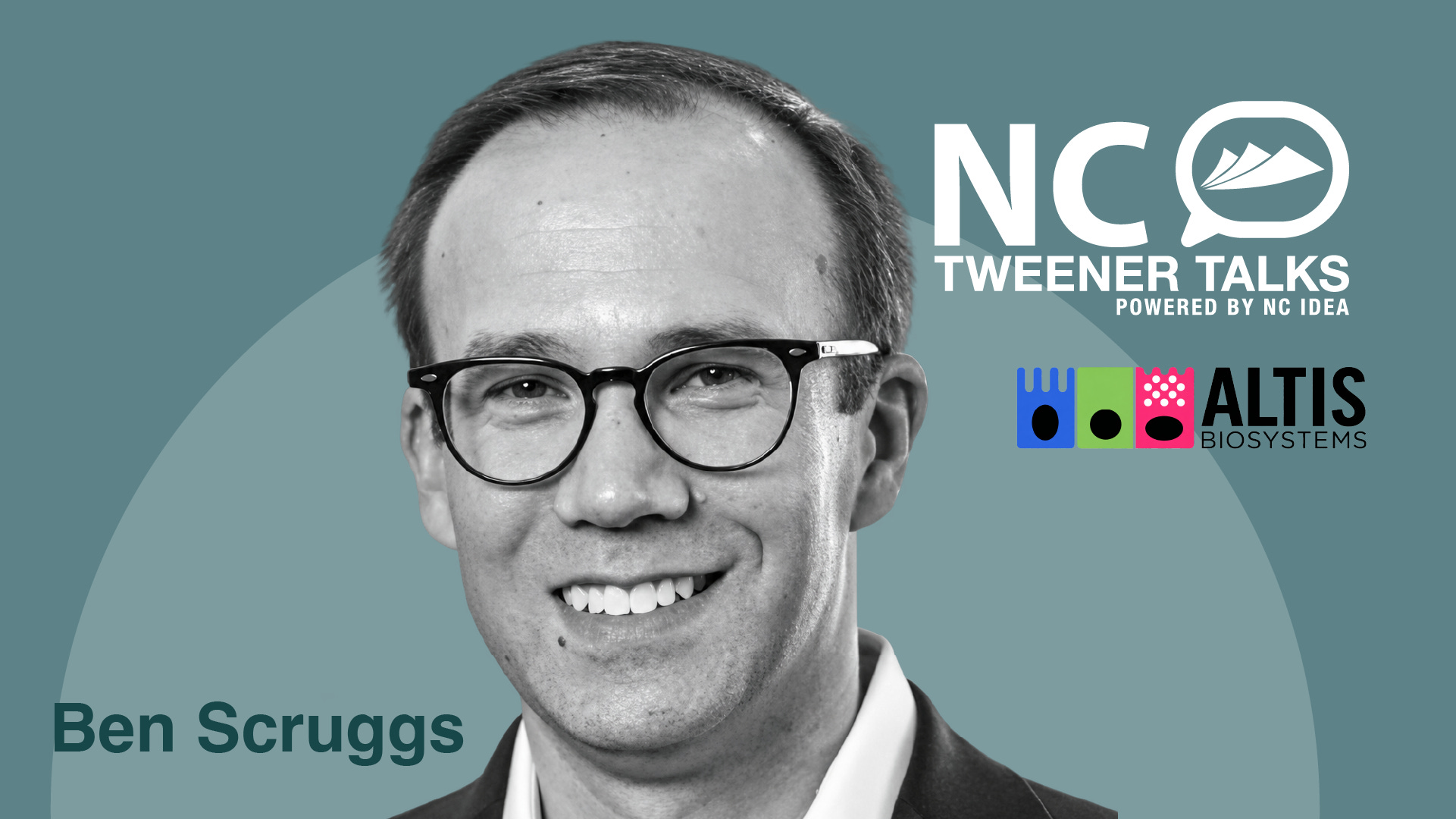
This week on NC Tweener Talks, I sit down with Ben Scruggs, CEO of Altis Biosystems, a Durham-based company developing human stem-cell-derived models of the gut. Pharma, biotech, and nutrition companies use Altis’s technology to better predict how a drug or ingredient will behave in the human body before it ever reaches a patient. The conversation is split pretty evenly between the company and the person behind it. We dig into how Altis’s technology works and why the gut is such an overlooked bottleneck in drug development, while also exploring Ben’s path from bench scientist to venture investor to first-time CEO.
We couldn’t bring you 100% original founder-to-founder content like this without the support of our awesome-sauce sponsors:
Loving our content? It wouldn’t be possible without our amazing sponsors and our paid subscribers, so THANK YOU!
Featured Platinum Sponsor

Featured Gold Sponsor

Featured Silver Sponsor

And special thanks to our friends at Walk West for partnering with us to produce this pod!
Who is Ben?
Ben Scruggs is CEO of Altis Biosystems, a Durham, NC company that grows human intestinal models from donor stem cells as a more predictive alternative to animal testing and cancer-cell-line models in drug development. Ben is a cell biologist by training, with a PhD in cell biology and a postdoc in RNA biology and genomics at the National Institute of Environmental Health Sciences (NIEHS); the postdoc that first brought him to the Research Triangle. He spent close to a decade as a venture investor with Hatteras Venture Partners, where he worked across drug development, medical devices, and healthcare IT, before stepping into operational roles inside the portfolio, including a Duke-spinout epigenetic editing company now in clinical trials for hepatitis B. He became CEO of Altis, a UNC spinout, about three years ago, and still maintains his relationship with Hatteras today.
Highlights
Ben’s pivot from scientist to investor to CEO: He trained as a cell biologist, earning a PhD in cell biology and completing a postdoc in RNA biology and genomics at NIEHS before spending nearly a decade as a venture investor at Hatteras Venture Partners and, about three years ago, stepping into the CEO role at Altis Biosystems while maintaining his Hatteras relationship.
Hatteras Venture Partners, by the numbers: More than 25 years old, 100+ healthcare investments, investing from its seventh fund, and, according to Scot, roughly $900 million under management, split about evenly between biotech and health-tech software.
Altis builds human intestinal models: Using real donor stem cells, the company recreates the gut’s epithelial barrier, the interface anything taken orally must cross to enter the body. Unwound, the human gut lining is roughly the size of a tennis court.
Three markets, one biological barrier: Altis serves absorption and metabolism studies, inflammation research such as inflammatory bowel disease, and toxicity screening. GI side effects are among the most common reasons drugs are discontinued during development.
GLP-1s are a timely stress test: Eli Lilly and Novo Nordisk are working to get notoriously difficult-to-absorb GLP-1 peptides into pill form, making bioavailability exactly the kind of question Altis’s models are designed to answer.
Altis has a dual business model: It operates as a full-service CRO, with in-house PhD scientists designing and running studies, while also selling self-serve kits in familiar 12-, 24-, and 96-well plate formats.
Altis has scaled from dozens to thousands of compounds: The company now routinely screens hundreds or thousands at once, requiring investment in automation and robotics rather than simply adding headcount.
The name “Altis” means “all tissues”: It reflects the company’s long-term vision to expand beyond the gut into other epithelial barriers, including the skin and lungs.
Altis is a UNC tech-transfer story: The company was founded by UNC scientists, its technology is exclusively licensed from the university, and its first investment came through a Hatteras-affiliated fund that manages capital for UNC.
“Advice is easy. Accountable operations is a whole other ball of wax.” Ben’s description of the difference between advising founders as a venture investor and actually running a company.
Ben’s unexpected CEO lesson is that the job is mostly selling: Persuading investors, recruiting talent, winning and retaining customers, and keeping employees engaged are all core parts of the role, skills scientists rarely receive formal training for.
Where to Watch/Listen:
Visit Tweener Talks to listen for all audio podcast players
We have a video version on YouTube (make sure to subscribe!)
📌 What’s Next
Subscribe to NC Tweener Talks for more conversations with North Carolina founders, operators, and builders shaping the future of the ecosystem. Paid subscribers help us keep creating more episodes, events, and founder-focused content across the state.