
The Triangle Innovation Summit
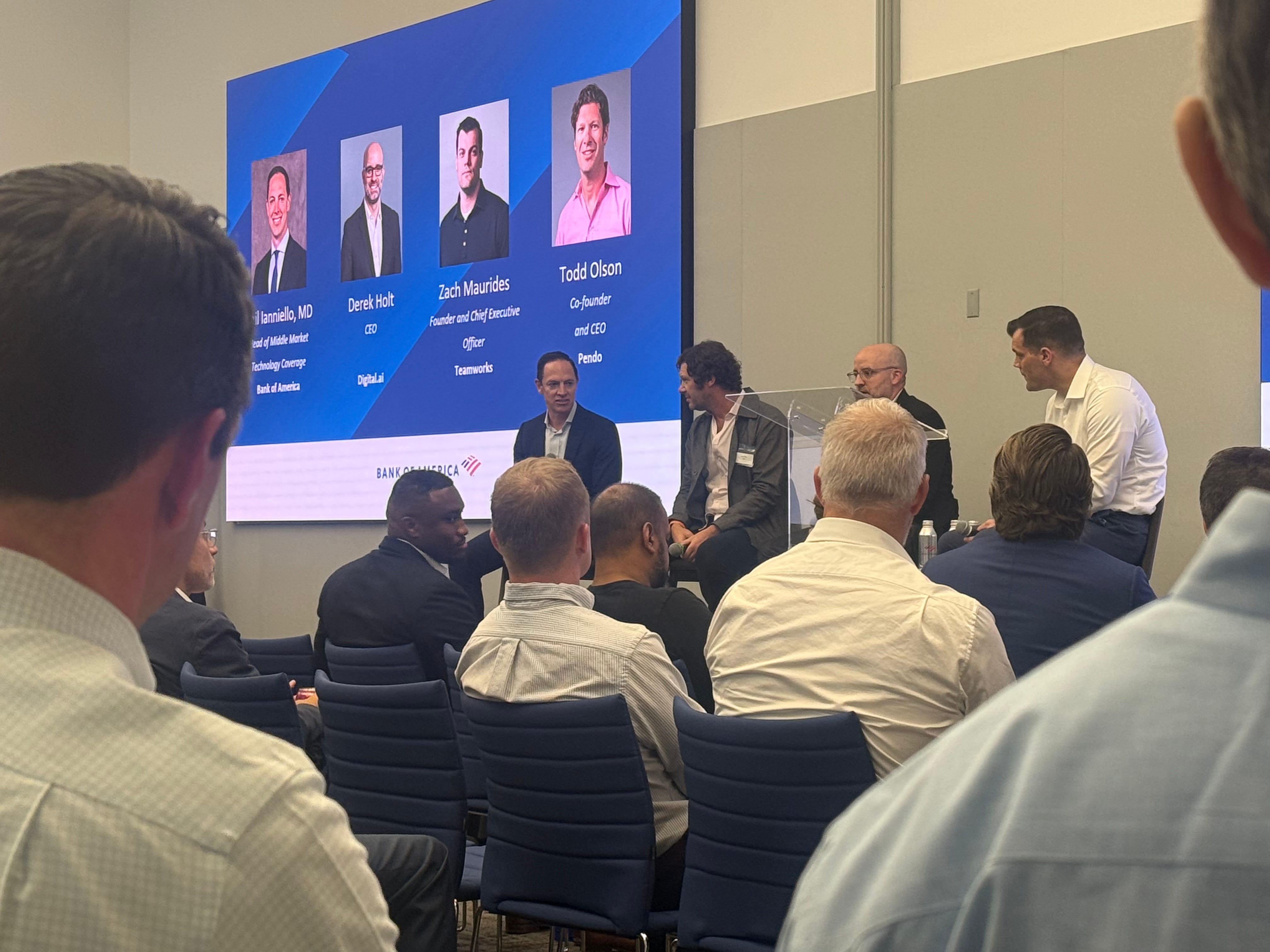
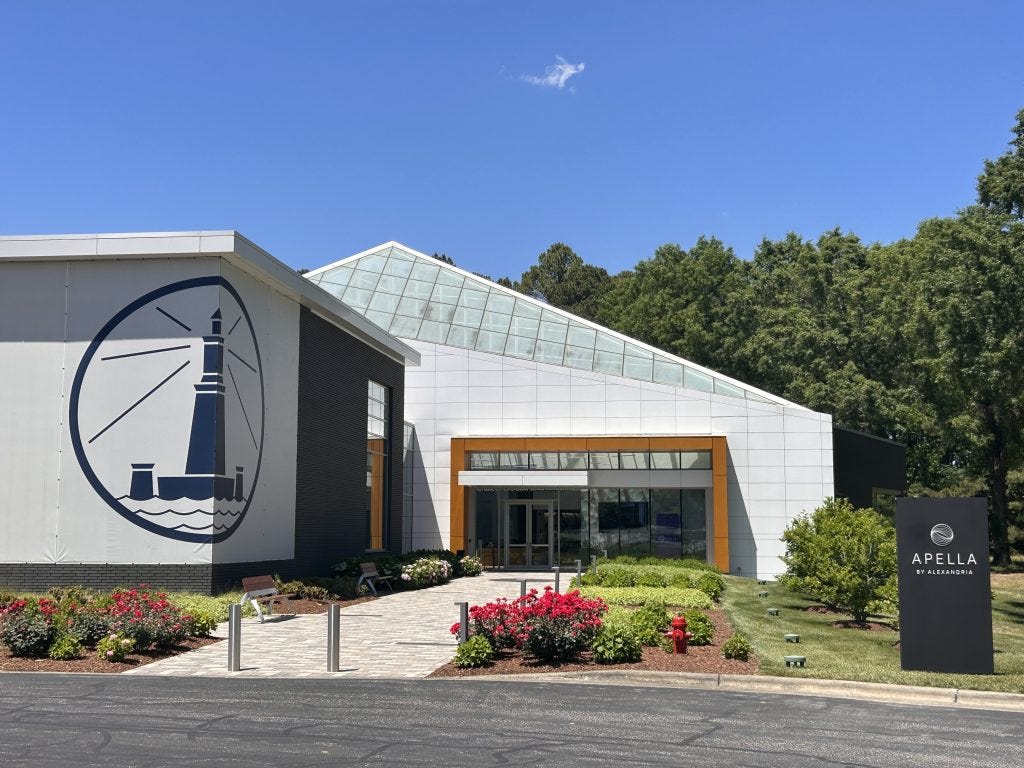
Last week, Bank of America hosted its annual Triangle Innovation Summit at Apella in Durham. Founders, investors, operators, and ecosystem leaders from across North Carolina came together for an afternoon on how AI is changing the way companies build, hire, raise, and exit.
Last year the big theme was capital discipline. This year it moved from “should we use AI?” to “now that everyone has it, how do we use it well?”
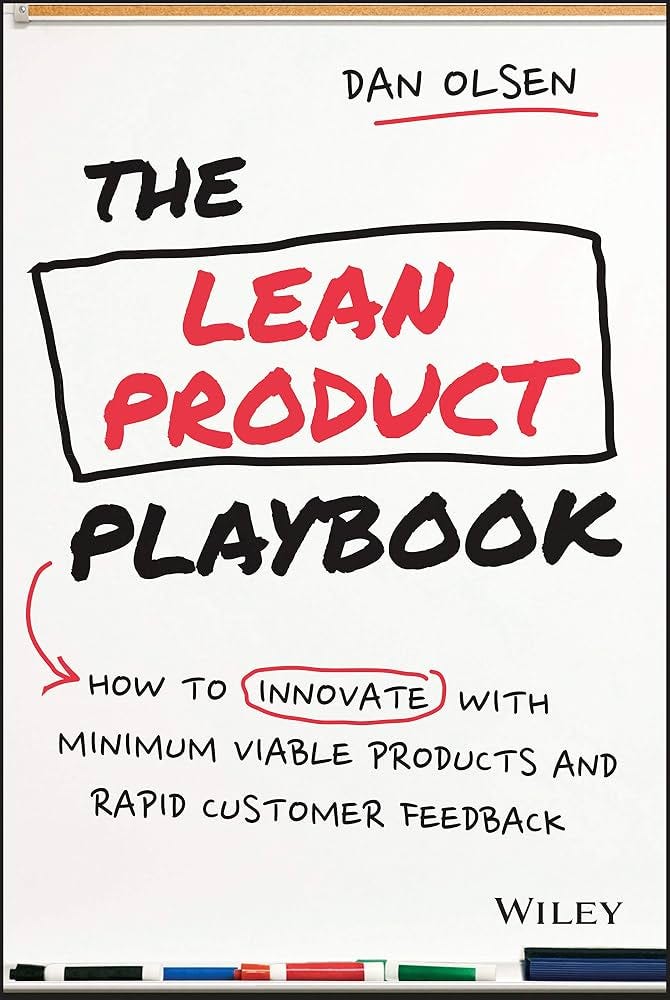
In Part 1, we cover the opening keynote from Dan Olsen, author of The Lean Product Playbook, his fireside chat with Eric Boduch of 24 and Up Venture Studios, and Bank of America’s outlook on the economy, IPOs, and M&A.
Thanks to our sponsors for sponsoring this post:


Opening Keynote: Dan Olsen, The Lean Product Playbook
Dan went from designing nuclear submarines for the Navy to learning product management at Intuit, and then to startups, writing and speaking. His framing: product development has gone through four eras, Waterfall → Agile → Lean → AI. When he polled the room, almost everyone said they use AI multiple times a day.
The bottleneck has moved upstream
Engineers are far more productive, so building is easier than ever. The catch: “It’s easier to build something that nobody wants than it ever was before.”
The hard part is now deciding what to build. The classic ratio of one PM to 5–8 engineers is breaking down, and teams need more product judgment, which Dan believes can be learned.
Dan’s four parts of product sense: a strong mental model of customer needs, smart prioritization, coming up with compelling solutions, and predicting which ideas will maximize customer value and ROI.
AI prototyping closes the “design gap”
Fewer than 5% of teams have enough design resources to prototype their ideas. Now anyone can turn a PRD into a working prototype. Dan mapped the tools from least to most technical: browser-based tools (Figma Make, Claude Design, Lovable, Bolt, v0), then IDE extensions, desktop apps (Cursor, Claude, Codex) and the command line (Claude Code). His advice for non-technical builders: “Why are you doing prototypes in Claude Code, bro?”
Type 1 vs. Type 2 work: Tools like Claude Cowork automate “Type 1” work such as status updates and decks. That frees up time for “Type 2” thinking: strategy, prioritization, and customer discovery.
Fireside Chat: Eric Boduch & Dan Olsen
Eric Boduch, founder of 24 and Up Venture Studios, joined Dan to talk about what AI means for teams.
Roles are blurring. PM, design, and engineering now overlap into a “product builder” role. PMs can prototype in Lovable in an afternoon, and Dan describes forward-deployed engineers as “PM-enabled engineers.” Stay-in-your-lane teams are falling behind.
The prototype-to-production gap. About half the room had designed a prototype since AI arrived, and many non-coders had shipped code for the first time. Eric told the story of a non-engineer who wrote a million lines of code in a few months: “Their company thought it was amazing. I thought it was an absolute nightmare.” Leading teams prototype on top of their existing design systems and use MCP to find “the minimum diff to implement this in our code base.”
Dan repeated advice he heard from an audience member at one of his early AI meetups: “Whatever you’re using AI for, you better be a pretty good expert in that area. Because otherwise it’s really good at BSing you.”
The junior talent problem. AI already outperforms a 10th-percentile developer but is nowhere near the 90th. So senior people are getting more leverage, and junior roles are being cut. Eric asked: “Where do the seniors come from?”
The next wave: shared context. Most companies rolled out Claude Enterprise in just the last few months.
“They just gave all their employees a Ferrari, but none of them know how to drive a Ferrari.”
The next challenge is shared skills and shared context across teams. As Eric put it: “We all need a shared harness. We all need shared context, memory, decisions.”
On utopia vs. extinction, Dan said it depends on what humans do: “If Dario’s worried about it, then I’m worried about it.”
Economic & Capital Markets Outlook: Phil Ianniello & Shawn Liu, Bank of America
Macro snapshot (Phil)
Still a growth economy: US GDP is expected to grow 3.1%, with ~60 basis points coming from AI investment. CEO confidence is well above historical norms.
Headwinds: geopolitical tension, $104 oil and inflation that is falling but still elevated. Consumer spending is strong even though consumer sentiment is negative.
Rates and volatility: The Fed made its first rate move the day before the summit, and a second is expected. The VIX is around 15, a healthy level for capital markets.
IPOs: record year, narrow window
2026 is on pace to be the best IPO year ever, driven almost entirely by mega-deals. A possible Anthropic IPO is the big Q4 question mark.
The median software IPO market cap is ~$6B, compared with ~$2B historically. The next window should open for companies with $200–400M in revenue.
M&A: record dollars, fewer deals (Shawn)
Total M&A dollar volume is the highest in a decade, nearly double pre-COVID levels. But mega-deals carry the total, and small deals have been quiet.
Software’s share has fallen more than 40%. AI and semiconductors now drive deal flow, with chipmakers buying software to become “more relevant and more durable.”
Dual-track pitches have doubled, and private equity firms are starting to sell. Creative structures like reverse mergers are “topic du jour.”
2027 outlook: CEO confidence is high and private equity capital is plentiful. Shawn is hopeful that smaller deals pick up.
Key Takeaway from Part 1
The first half of the summit had one clear message. AI has made building easy, so judgment is now the scarce resource. That applies to product teams deciding what to build, organizations moving from individual AI use to shared context, and investors choosing where the next dollar goes.
For Triangle founders, the edge will come from customer insight, strong teams and capital efficiency, not just from shipping faster.
Next up in Part 2: the BofA Capital Markets Deep Dive, “Navigating the New VC & PE Landscape”, Cofounders Capital and Tech Square Ventures, and the closing keynote on reimagining the Triangle.