

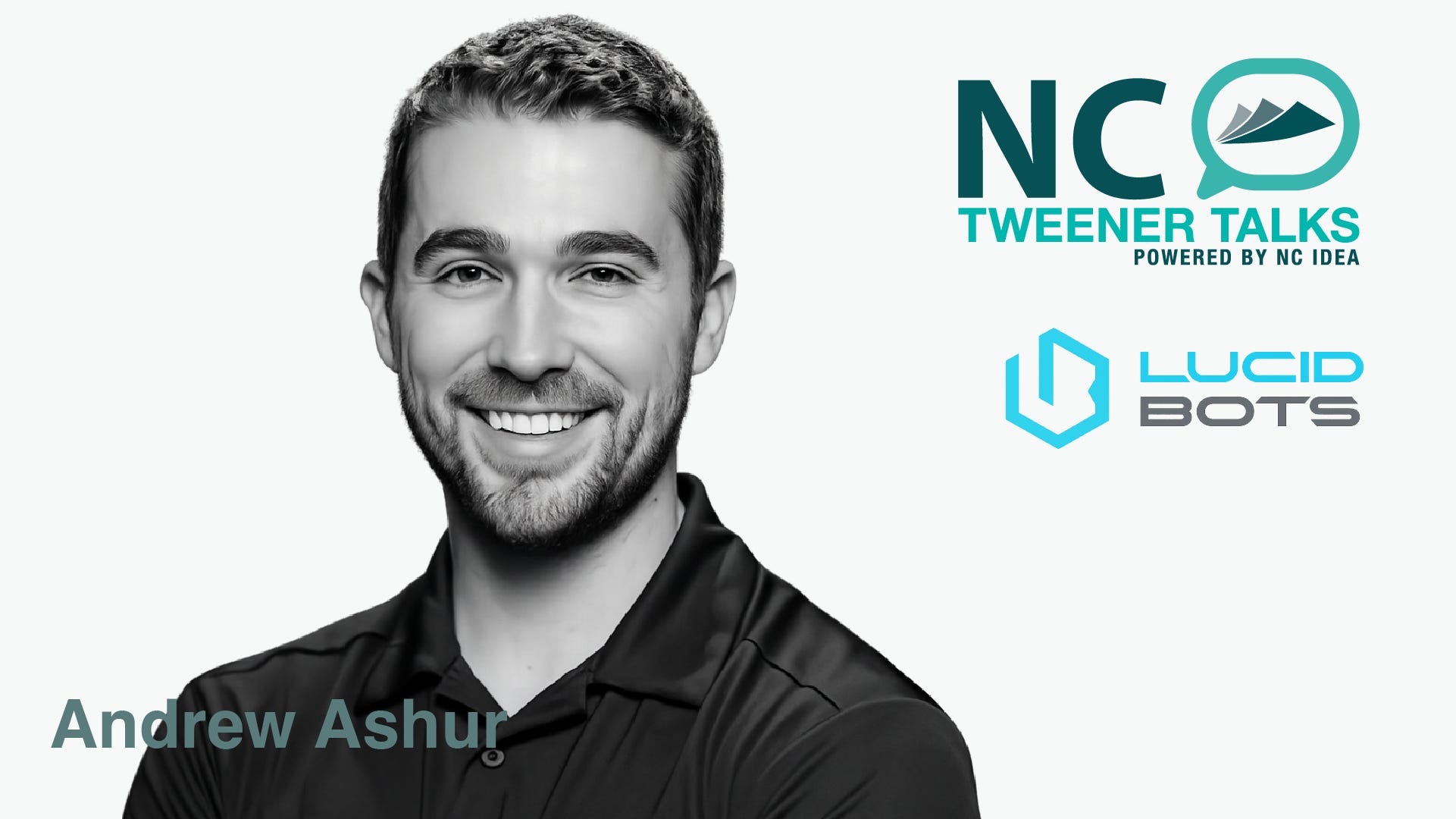
This week we continue our series on North Carolina startups solving hard physical-world problems with Andrew Ashur, co-founder and CEO of Lucid Bots, a Charlotte-based Series B company building drones and robots that clean, paint, and coat buildings. It’s a company-heavy conversation where Andrew walks through the mechanics of flying a tethered, industrial-scale drone and the economics of a robots-as-a-service business, but it’s threaded with founder lessons on storytelling, hiring, and fundraising that any early-stage founder will recognize.
We couldn’t bring you 100% original founder-to-founder content like this without the support of our awesome-sauce sponsors:
Loving our content? It wouldn’t be possible without our amazing sponsors and our paid subscribers, so THANK YOU!
Featured Platinum Sponsor

Featured Gold Sponsor

Featured Silver Sponsor

And special thanks to our friends at Walk West for partnering with us to produce this pod!
Who is Andrew?
Andrew Ashur is co-founder and CEO of Lucid Bots, a Charlotte-based robotics company building drones and robots that automate cleaning, painting, and coating for the built environment. He started the company as a junior at Davidson College, where he was studying economics and Spanish, after watching a window-washing crew get slammed against a building in high winds. He graduated a year early to run Lucid Bots full time, and the company has since raised more than $30 million in venture capital, deployed over 600 units across 44 states and five countries, and grown to a team of 75. Andrew is a first-time founder, a Forbes 30 Under 30 honoree, an alum of Y Combinator, and now serves as Davidson College's Innovator-in-Residence.
Highlights
The origin story: Andrew was a junior at Davidson College studying economics and Spanish when he watched window washers get slammed against a building in high winds and asked the obvious question: how do we make this safer?
The stakes: “Somebody dies every 4 days in our country cleaning a building,” roughly 80 people a year in the U.S. alone, doing work Andrew calls less advanced than the technology that gets people to space.
Real estate as the prize: Real estate is the largest asset class in the world, worth more than all stock and bond markets combined, and none of it holds its value without maintenance.
The duct-tape prototype: The first version was a DJI drone zip-tied to a pressure washer. “It looked terrible. It didn’t really work... but we saw the potential of it.”
A Christmas gift that changed everything: When their last DJI drone broke two days before Christmas, Andrew’s uncle gave him the book DIY Drones with Arduino, which sparked the decision to start building drones in-house in 2019.
Hardware as a moat: Lucid Bots is now on version 16 of its hardware and well over 1,000 software revisions. “Hardware done right is where the moat still exists.”
The numbers: $30M+ raised, 600+ units deployed, a team of 75, and customers in 44 states and five countries, with Canada as the biggest market outside the U.S.
The ROI: Customers report at least 2x efficiency gains and up to 8x faster completion on large industrial jobs like water towers compared with a traditional boom lift.
Two ways to buy: Customers can either purchase robots outright or use “Lucid Refresh,” a 24-month robots-as-a-service subscription that swaps in the latest hardware at renewal.
Physical GDP vs. venture dollars: Roughly 85% of global GDP sits in the physical world and only 15% is digital, yet venture capital has flowed disproportionately into software.
1,000 pitches: Andrew estimates he pitched roughly 1,000 times before closing the company’s Series B. “Almost half my time was spent fundraising.”
Andrew's closing bet: the biggest opportunity of this generation isn't another app; it's giving software and AI a physical body. Enjoy the conversation.
Where to Watch/Listen:
Visit Tweener Talks to listen for all audio podcast players
We have a video version on YouTube (make sure to subscribe!)
📌 What’s Next
Subscribe to NC Tweener Talks for more conversations with North Carolina founders, operators, and builders shaping the future of the ecosystem. Paid subscribers help us keep creating more episodes, events, and founder-focused content across the state.